China Best HIFU Machine Which One Should You Buy?

Time:2026-09-24 Author:Oliver
0%

Choosing the China Best HIFU Machine is not as simple as comparing prices or counting treatment modes. A polished screen can look impressive, but it says little about energy consistency, cartridge quality, or long-term support. HIFU Machine buyers should examine verified specifications, service terms, and supplier experience before making a decision. Small details matter.

This guide explores the practical differences between HIFU systems available from Chinese manufacturers. It considers operating frequency, depth options, shot control, cooling design, and the clarity of the user interface. Ask for current documentation and a product demonstration, not just attractive catalogue images. Request clear warranty details, training arrangements, and a realistic explanation of maintenance needs. These checks can reveal gaps that a low headline price may hide.

A capable device is only part of the picture. Operator training, suitable patient assessment, and consistent protocols also influence how responsibly a system is used. Requirements and standards can vary by market, so buyers should confirm applicable guidance with qualified local professionals. No specification guarantees a particular result. That is worth remembering.

The comparison ahead is designed to help clinics and distributors ask better questions, rather than declare one machine the universal winner. Some product details may be difficult to verify, and that uncertainty should be stated—not brushed aside. By weighing performance claims against evidence, support, and intended use, readers can make a more informed shortlist.
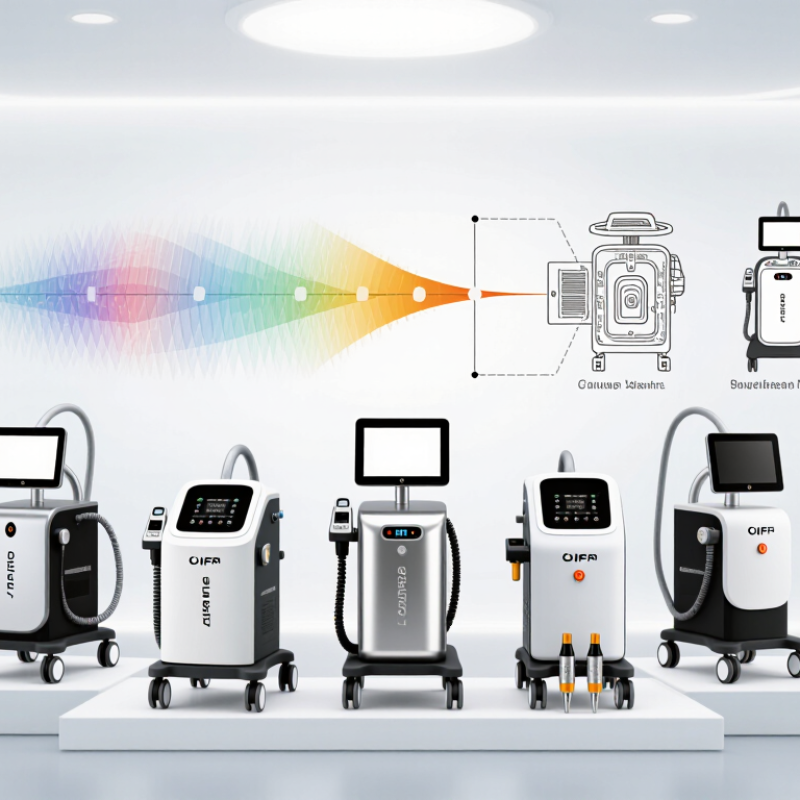
China Best HIFU Machine Which One Should You Buy?

HIFU Basics: How 1.5, 3.0, and 4.5 mm Focal Depths Differ

China Best HIFU Machine Which One Should You Buy?

HIFU focal depth matters more than attractive specifications. A 1.5 mm cartridge targets superficial skin layers, where fine texture and early laxity may appear. The 3.0 mm depth reaches deeper dermal tissue and may support collagen remodeling. A 4.5 mm cartridge is designed for deeper structural layers, often near the superficial muscular fascia. Depth is not interchangeable. Facial thickness, treatment area, and patient anatomy can change the safest choice.

A deeper setting is not automatically better. Excess energy may cause unnecessary discomfort or uneven results, especially on thin cheeks or around the eyes. The machine should provide stable energy delivery, accurate cartridge calibration, and clear treatment parameters. An experienced, properly trained practitioner should assess skin thickness and medical history before treatment. Product labels alone cannot prove performance. That assumption deserves caution.

Tips: Ask how focal depth is verified, how cartridges are maintained, and whether the device has appropriate approval for your market. Request a realistic treatment plan, including possible limitations and downtime. Avoid choosing only by low price or a high cartridge count. In practice, careful technique often matters more than impressive numbers. Evidence is still developing, so honest consultation remains essential.

HIFU Basics: How 1.5, 3.0, and 4.5 mm Focal Depths Differ

Common HIFU focal depths and their typical anatomical targets. Actual tissue depth varies by body area, anatomy, and treatment protocol.

A 1.5 mm cartridge generally targets the dermis, 3.0 mm is commonly associated with the deeper dermis or superficial subcutaneous layer, and 4.5 mm is commonly intended to reach the deeper subcutaneous tissue near the SMAS region. These focal depths are not interchangeable, and clinical selection should be based on anatomy and professional assessment.

Compare Chinese HIFU Machines by Frequency, Energy, and Treatment Lines

Choosing a HIFU machine from China requires more than comparing prices. Frequency, energy, and treatment lines directly affect treatment planning, comfort, and operating efficiency. A qualified practitioner should review technical documents, clinical evidence, and local compliance before purchase.

Frequency & Energy
Frequency must match the intended treatment depth. Around 1.5 mm may suit superficial areas, while 3.0 mm or 4.5 mm cartridges generally target deeper layers. However, frequency alone does not determine performance. Transducer quality, focal accuracy, and energy stability matter just as much. Higher energy is not automatically better. Excessive settings can increase discomfort and safety concerns, especially around thin facial areas. Adjustable energy with clear step controls is more practical than a powerful but poorly calibrated system.

Treatment Lines & Daily Operation
Treatment lines also deserve close attention. A single-line handpiece may offer precision but require more time. Multi-line delivery can cover the same area faster, which helps busy clinics. Yet speed can reduce control if the interface is confusing. I would check line spacing, shot counting, cartridge life, and real-time feedback during a hands-on demonstration. Ask for maintenance records and operator training materials. Some specifications look impressive on paper, but daily handling reveals weaknesses. A thoughtful purchase balances frequency options, stable energy output, treatment speed, and verified support rather than chasing the highest numbers.

Check IEC 60601-1 Safety and ISO 13485 Manufacturing Certification

China Best HIFU Machine: Which One Should You Buy?

When comparing HIFU machines, safety evidence should guide the purchase. IEC 60601-1 covers basic safety and essential performance for medical electrical equipment. It does not prove every clinical claim. Check the test report, certificate number, laboratory details, and product model carefully.

ISO 13485 confirms a manufacturer’s quality management system. It does not automatically approve a specific machine. The ISO Survey 2022 recorded more than 31,000 ISO 13485 certificates worldwide, showing broad adoption of this quality framework. However, certificate volume is not a guarantee of consistent manufacturing quality.

Tips: Request current certificates and their scope. Confirm that the listed model matches the delivered unit. Ask for electrical safety test records, calibration procedures, risk management files, and traceability information. Verify whether the certificate covers the factory or only a separate legal entity. Small details matter.

In practical supplier reviews, I would also inspect cable insulation, handpiece labels, emergency-stop access, and cooling performance. HIFU energy can create unwanted thermal effects when calibration or treatment settings are poorly controlled. A polished certificate cannot replace operator training or maintenance records. I would not select the cheapest machine automatically, although budget remains important for smaller clinics. No checklist is perfect. Some documents may be genuine but outdated, incomplete, or difficult to verify. A reliable supplier should answer technical questions clearly and provide consistent records before payment.

Verify FDA 510(k) Status, Clinical Evidence, and Intended Use

China Best HIFU Machine: Which One Should You Buy?

Buying a HIFU machine from China requires more than comparing prices, power, or probe designs. Start with the intended use. Is the device cleared for aesthetic skin tightening, tissue coagulation, or another specific procedure? The indication, treatment area, and user requirements should match your clinic’s actual service. A polished sales page is not clinical evidence.

Check the FDA 510(k) database using the exact device name, manufacturer, and model number. A 510(k) clearance means substantial equivalence to a legally marketed device. It does not mean FDA approval or proof of every marketing claim. Ask for the official decision letter, cleared indications, user population, and authorized accessories. Be careful with screenshots. They can be incomplete or outdated.

Clinical evidence deserves close reading. Look for peer-reviewed studies, treatment settings, follow-up periods, adverse events, and patient selection details. Small studies may look impressive but still leave practical questions unanswered. In my experience, training quality and protocol discipline often influence results as much as hardware. Inspect calibration records, probe lifespan, software controls, and service response times. These details matter on a busy treatment day. My judgment can still be wrong, especially when evidence comes from limited populations. Compare documents independently, involve a qualified clinician, and confirm local regulatory requirements before purchase or use.

China Best HIFU Machine Which One Should You Buy? - Verify FDA 510(k) Status, Clinical Evidence, and Intended Use

Evaluation Dimension What to Verify Reliable Evidence or Benchmark Buying Interpretation
FDA 510(k) status Check the exact device model, applicant, product code, decision date, and intended use in the FDA 510(k) database. An FDA 510(k) clearance is device-specific. FDA establishment registration or listing alone is not the same as 510(k) clearance. Do not accept a certificate or marketing statement without a matching FDA database record. Verify at FDA 510(k) Premarket Notification Database.
Intended use Determine whether the system is intended for aesthetic skin tightening, tissue coagulation, body contouring, or another defined application. The intended use should be consistent across the label, user manual, regulatory record, indications for use, and clinical documentation. Choose a system whose cleared or legally marketed indication matches the treatment you plan to provide. Avoid expanding the indication based only on sales claims.
Technology type Confirm whether the device uses focused ultrasound, microfocused ultrasound, or another ultrasound configuration. Ultrasound systems differ in frequency, focusing method, applicator design, energy delivery, and treatment depth. Compare devices by verified technical specifications rather than using “HIFU” as a sufficient description of performance.
Treatment depth Review the available focal depths and the anatomical areas approved or recommended for each cartridge or applicator. Common aesthetic ultrasound applicators may target different tissue planes; depth alone does not establish safety or effectiveness. Select depth options that correspond to the treatment area and patient anatomy. More depth options do not automatically mean better results.
Clinical evidence Ask for peer-reviewed clinical studies that identify the device, treatment parameters, sample size, follow-up period, outcomes, and adverse events. A controlled clinical study with clearly reported methods and follow-up is more informative than before-and-after photographs without standardized assessment. Give greater weight to evidence generated with the exact model and applicator, not studies performed with unrelated systems.
Treatment parameters Verify frequency, pulse duration, energy range, line or dot spacing, shot count, cooling or coupling method, and parameter adjustment controls. Parameters should be stated in the technical manual and correspond to the validated treatment protocol. Prefer transparent, reproducible settings with safeguards against excessive or unintended energy delivery.
Safety controls Check skin-contact detection, treatment confirmation, energy calibration, emergency stop, applicator identification, and electrical safety documentation. The system should include documented risk controls and instructions for avoiding sensitive structures, inappropriate areas, and excessive exposure. Safety features and documented procedures should be considered essential, not optional accessories.
Contraindications and precautions Review restrictions involving active skin conditions, implanted electronic devices, metallic implants in the treatment area, pregnancy, impaired sensation, and other conditions listed in the manual. Contraindications must come from the device-specific instructions for use and applicable clinical guidance. Require documented patient screening and informed consent before treatment.
Operator training Confirm whether training covers anatomy, treatment mapping, parameter selection, contraindications, adverse-event management, and equipment maintenance. A completion certificate is useful only when supported by a structured curriculum and competency assessment. Buy only when qualified operators can receive device-specific training and ongoing technical support.
Quality and compliance documents Request the declaration of conformity or applicable market authorization, electrical safety test reports, labeling, serial-number traceability, and quality-management documentation. Documents should identify the same model and manufacturer information as the device label and purchase contract. Incomplete or inconsistent documents are a significant procurement warning sign.
Consumables and applicators Check cartridge compatibility, sterile or non-sterile status, shelf life, shot limits, replacement cost, and availability. Applicators with different focal depths or energy characteristics are not automatically interchangeable. Calculate the total cost per treatment, including replacement cartridges and service requirements.
Warranty and service Verify warranty duration, calibration service, spare-part availability, response time, software support, and repair procedures. A written service agreement is more reliable than an informal warranty promise. Prioritize support coverage in your country or region, especially for calibration and safety-related repairs.
Final purchase decision Compare regulatory status, evidence quality, intended use, safety controls, total operating cost, and service support as a combined score. No single certificate, specification, or photograph proves that a device is the best choice for every clinic or patient. The most suitable system is the one with verifiable authorization, device-specific evidence, appropriate indications, qualified operation, and dependable after-sales support.

Note: FDA 510(k) clearance applies to a specific device and stated intended use. It should not be interpreted as a guarantee of clinical outcomes for every patient or treatment protocol.

Match Service Support, Consumable Costs, and Warranty to Your Clinic

China Best HIFU Machine Which One Should You Buy?

Choosing a HIFU machine requires more than comparing treatment prices. Service support, consumable costs, and warranty terms can affect your clinic every week. Ask how quickly technical staff respond when the device shows an error. A clear support process matters during a busy treatment day. Request training records, user manuals, maintenance schedules, and proof of technician qualifications. Remote guidance is useful, but some faults need hands-on service.

Consumable expenses deserve careful checking. Confirm cartridge prices, recommended shot limits, replacement intervals, and compatible accessories. A lower machine price may hide expensive cartridges or limited availability. I once underestimated downtime costs during a purchasing review. That mistake changed the final budget. Also, read the warranty exclusions carefully. Check coverage for the handpiece, screen, cables, and internal components. Ask whether shipping, labor, and replacement parts are included. A long warranty sounds reassuring, but slow service can still disrupt appointments.

Tips: Build a three-year cost sheet before ordering. Record expected treatments, cartridge use, training fees, maintenance, and possible shipping charges. Ask for two clinic references with similar treatment volumes. Their experience may reveal small problems that sales documents overlook. Keep every service promise in writing. Vague answers deserve another question.

FAQS

What does a 1.5 mm focal depth target?

It targets superficial skin layers. It may suit fine texture and early laxity. It is not automatically suitable for every face.

When is a 3.0 mm focal depth used?

It reaches deeper dermal tissue. Practitioners may use it to support collagen remodeling. Skin thickness still matters.

What is the purpose of a 4.5 mm focal depth?

It reaches deeper structural layers near the superficial muscular fascia. Deeper does not mean better. Thin cheeks may need extra caution.

Can one focal depth work for every treatment area?

No. Facial thickness, anatomy, and treatment areas differ. The eye area may require different settings from the jawline. Depths are not interchangeable.

What should a clinic check before buying a HIFU device?

Check intended use, treatment areas, and user requirements. Request calibration records and clear treatment parameters. Marketing claims alone are not enough.

How can a clinic evaluate clinical evidence?

Look for peer-reviewed studies, treatment settings, follow-up periods, and reported adverse events. Check patient selection carefully. Small studies may leave important questions unanswered.

What service details should buyers confirm?

Ask about response times, technician qualifications, manuals, and maintenance schedules. Some faults require hands-on service. Remote support is useful, but imperfect.

How should clinics estimate long-term costs?

Create a three-year cost sheet. Include cartridges, training, maintenance, shipping, and expected treatment volume. A cheaper machine may have costly consumables.

What should buyers ask about cartridges and warranties?

Confirm shot limits, replacement intervals, prices, and compatible accessories. Read exclusions for handpieces, screens, cables, and internal parts. A long warranty can still provide slow support.

What is a sensible final purchasing approach?

Compare documents independently and consult a qualified clinician. Ask for references from clinics with similar workloads. Keep every service promise in writing. My judgment could still be wrong.

Conclusion

Choosing the right HIFU Machine requires more than comparing prices or appearance. Start by understanding focal depths: 1.5 mm is generally used for superficial skin layers, while 3.0 mm and 4.5 mm reach progressively deeper tissue. Compare each device’s operating frequency, adjustable energy levels, cartridge options, and treatment line capacity to determine whether it suits facial, body, or specialized clinical applications. A clear match between technical specifications and intended use is essential for safe and consistent treatments.

Before purchasing, review IEC 60601-1 electrical safety compliance and ISO 13485 manufacturing certification, then verify any FDA 510(k) status, clinical evidence, and approved intended use applicable to your market. Also evaluate training, technical support, replacement cartridge availability, consumable costs, and warranty coverage. The best choice is not necessarily the most powerful system, but the one that offers appropriate performance, documented quality, reliable service, and sustainable operating costs for your clinic.


Oliver

Oliver

Oliver is a seasoned marketing professional with a wealth of expertise in driving brand awareness and engagement. With a deep understanding of our company's product offerings, he consistently delivers high-quality content that enriches our professional blog. His insights not only shed light on......