The global beauty industry is becoming more measurable, visual, and data-driven. McKinsey’s 2023 beauty market analysis projected the sector could approach $580 billion by 2027, with continued growth across skincare and related services. This expansion increases demand for reliable diagnostic tools, especially in clinics, salons, pharmacies, and professional retail environments. A modern Skin Analysis Machine can capture images, assess visible concerns, and support more consistent consultations. It can show pore appearance, pigmentation patterns, texture, redness, and moisture-related indicators on a client’s face. The screen becomes part of the conversation.
Yet, impressive images do not automatically create accurate conclusions. Grand View Research’s 2023 analysis of beauty devices highlighted technology adoption, personalization, and professional services as important market drivers. Buyers should still examine image resolution, lighting control, calibration, software logic, reporting functions, and data security. A device that performs well in a bright showroom may produce weaker results under uneven salon lighting. Small details matter.
This guide reviews 10 Skin Analysis Machine options for global buyers. It considers clinical usability, operating workflow, training requirements, after-sales support, and regional compliance documentation. The U.S. Food and Drug Administration and other national regulators distinguish between general wellness tools and medical devices. That difference should not be ignored. A machine may support observation without diagnosing disease. Results also depend on skin preparation, operator skill, camera distance, and environmental conditions. Some product claims remain difficult to compare across brands. That is a limitation worth admitting. The strongest choice is not always the most expensive model. It is the system that produces repeatable information, protects client data, and helps professionals make responsible decisions.
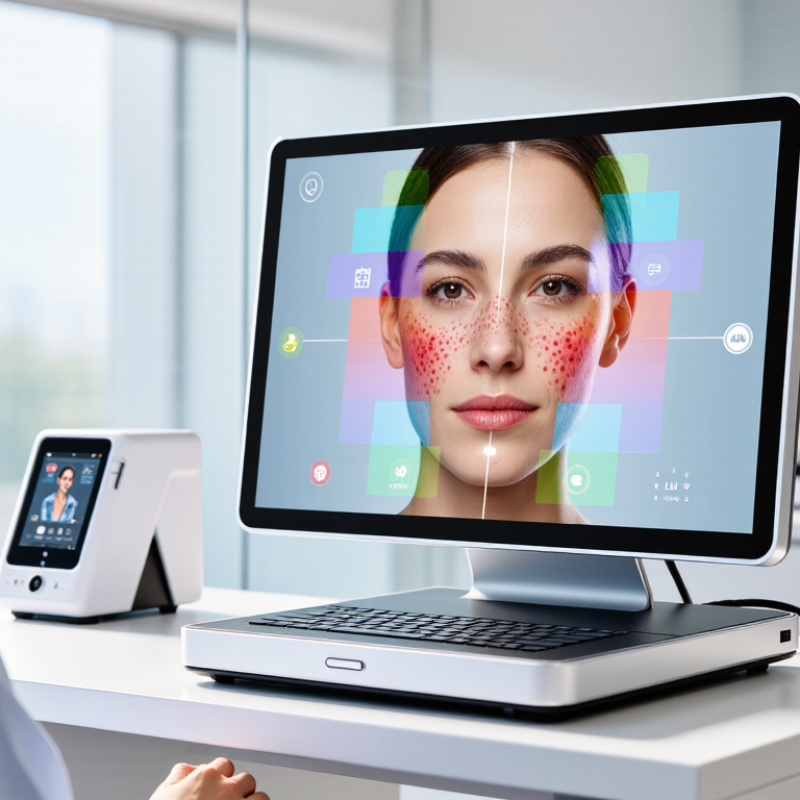
Skin analysis machines are digital tools that examine visible skin conditions in a controlled way. They may use high-resolution cameras, polarized light, UV illumination, or moisture sensors. During a consultation, the client usually rests the face inside a light-controlled chamber. The machine captures several images from different angles. Software then compares skin features and produces measurements for pores, pigmentation, redness, wrinkles, oil, and hydration.
The process is more than taking a clear photograph. Algorithms identify patterns that may be difficult to notice under normal room lighting. A trained professional reviews the results, checks the client’s history, and explains what each measurement means. For example, high surface oil does not always mean healthy hydration. Dry-feeling skin may still show excess oil in the T-zone. This distinction matters when discussing cleansers, moisturizers, or professional care plans.
Results depend on the operator and the environment. Makeup, sunscreen, recent exercise, strong lighting, and camera distance can change the reading. The numbers can look precise, but precision is not always truth. A reliable assessment should use consistent settings and repeat testing when results seem unusual. I have found that clients often trust colorful skin maps too quickly. That is a weakness worth acknowledging. These machines support observation; they do not replace clinical judgment or diagnose disease. Buyers should examine calibration records, data protection practices, training requirements, and reporting methods before choosing equipment for international use.
It should capture pores, pigmentation, redness, texture, and moisture indicators clearly. Multi-spectrum imaging can reveal details ordinary photographs miss. More modes are not always better.
Repeat each scan three times under the same lighting. Compare the readings, not just the pictures. Test different ages, skin tones, and common skin concerns. Small differences may still need explanation.
Uneven lighting can change the appearance of redness, texture, and pigmentation. Use adjustable lights and fixed positioning during follow-up visits. A bright room can still produce unreliable images.
A stable chin rest helps maintain the same facial position. Distance markers keep the camera placement consistent. Clear on-screen instructions reduce training mistakes. Simple tools often work better.
No. High resolution mainly shows more surface detail. Polarized or multispectral imaging may reveal additional contrasts. Yet complicated systems can create impressive reports with inconsistent daily use.
Staff should check scanning speed, report clarity, and record comparison tools. Several operators should test the machine. Ask whether employees can explain results without technical confusion. Confidence matters.
Request sample reports, technical documentation, maintenance details, training hours, and warranty terms. Check subscription fees and replacement costs. A low purchase price may hide ongoing expenses.
Choose secure storage, exportable reports, and clear consent controls. Confirm that settings support local privacy requirements. Avoid presenting uncertain estimates as medical facts. I would still review the policy carefully.
Makeup residue, facial movement, room temperature, and operator technique can affect results. Reflective skin and poor lighting may reduce consistency. No device is flawless. Careful comparison prevents expensive disappointment.
A Skin Analysis Machine is a professional imaging and assessment device designed to examine visible and underlying skin conditions, such as dryness, oiliness, pigmentation, pores, wrinkles, redness, and uneven texture. By combining high-resolution photography with controlled lighting and, in some systems, specialized imaging modes, it helps professionals create a clearer skin profile and track changes over time. When comparing models, global buyers should consider image resolution, analysis depth, software functions, user interface, reporting options, data security, maintenance requirements, and compatibility with different clinical or salon workflows.
This guide introduces ten practical options for clinics, salons, and distributors, focusing on how to evaluate accuracy, usability, imaging technology, and overall value. Buyers should review whether results are consistent, easy to understand, and supported by reliable training and technical service. They should also consider budget, portability, installation, language support, warranty coverage, regulatory suitability, and long-term operating costs before selecting equipment for professional use.

 Aidiesin