Choosing the best Hair Removal Laser in 2026 requires more than comparing prices or glossy treatment photos. Global buyers need evidence, practical experience, and clear safety information. A device that performs well in one clinic may not suit another country, skin type, or operating environment.
This guide examines key buying factors, including wavelength, fluence, pulse duration, spot size, cooling systems, treatment speed, and maintenance requirements. It also considers different skin tones, hair textures, patient comfort, and realistic treatment schedules. A qualified professional should assess skin sensitivity, medications, tanning history, and contraindications before treatment. Results vary. Permanence is not guaranteed.
Regulatory approval matters. Buyers should verify applicable requirements with local health authorities and review documentation from recognized testing or certification bodies. CE marking, FDA clearance, or another regional authorization may support trust, but each approval has a specific scope. It should never replace clinical training or responsible use. Supplier support matters too, especially when replacement parts, software updates, calibration, or technical service are needed.
Look beyond the brochure.
Some specifications can appear impressive but provide little practical value. A high energy setting is not automatically better. Poor cooling, inconsistent pulses, or inadequate operator training may increase discomfort and skin risks. This article compares professional and suitable home-use options with a careful, buyer-focused approach. It also acknowledges an uncomfortable reality: the “best” Hair Removal Laser is rarely universal. The right choice depends on budget, market rules, treatment goals, client profiles, and long-term service reliability.
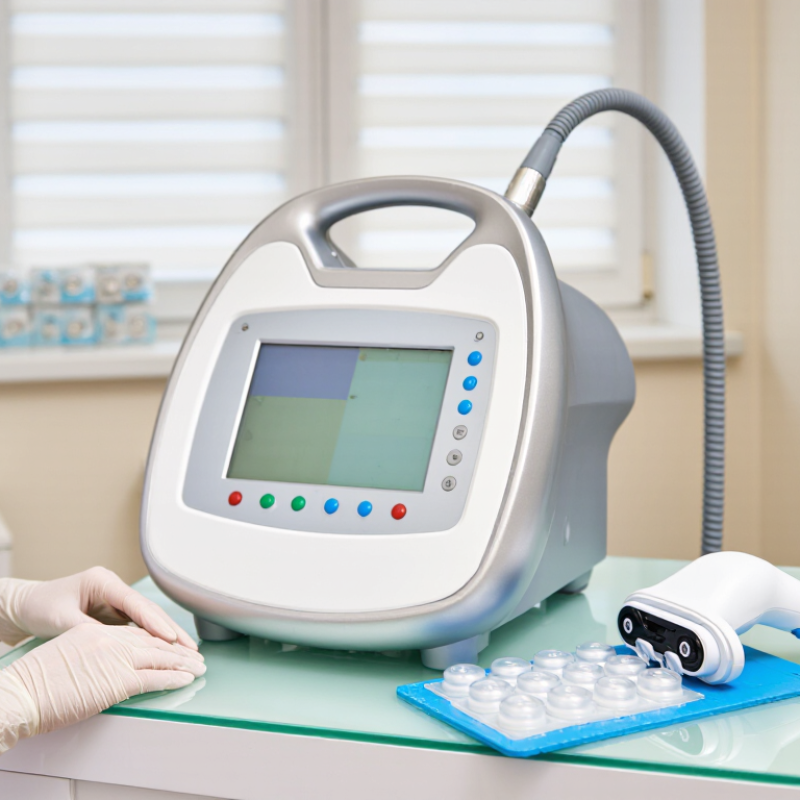
Laser Hair Removal Technology Explained for Global Buyers in 2026
Global demand is rising, but laser selection should not follow market hype. Grand View Research estimated the laser hair removal market at about USD 1.03 billion in 2023. Its 2024 report projects an 18.2% compound annual growth rate through 2030. These figures show strong demand, not automatic treatment quality.
Technology matters. Diode systems commonly use around 800–810 nm wavelengths and suit many skin and hair combinations. Alexandrite systems near 755 nm can work efficiently on lighter skin with dark hair. Nd:YAG systems near 1064 nm generally offer deeper penetration and better safety margins for darker skin types. IPL is different. It uses broad-spectrum light, not a single laser wavelength.
Look beyond wattage claims. Check adjustable fluence, pulse duration, spot size, cooling, and skin-tone sensors. The American Society for Dermatologic Surgery stresses professional assessment because burns and pigment changes can occur. A device may perform well in a laboratory, yet poorly with untrained operators. That is an uncomfortable point.
Independent clinical evidence matters more than a polished brochure. Ask for testing across relevant skin types, not only ideal examples. Confirm electrical certifications, service support, and local regulatory acceptance. Hair thickness, hormonal changes, and treatment consistency also affect results. I once treated “higher power” as the main buying signal. That was too simplistic. Better control usually matters more.
2026 Best Hair Removal Laser for Global Buyers?
Key Factors for Comparing Hair Removal Laser Systems
Choosing the best hair removal laser in 2026 requires more than comparing power ratings. Skin tone range, hair thickness, treatment area, and operator experience all affect performance. A system should provide clear technical data for wavelength, fluence, pulse duration, spot size, and cooling control. These details help clinics match settings to real patients instead of relying on attractive sales claims.
Safety should remain the first comparison point. Look for built-in temperature monitoring, protective eyewear guidance, emergency controls, and documented training materials. Ask whether the equipment meets applicable standards in the target market. Local registration and qualified operation may also be required. The rules differ between countries. Confirm them before purchase.
Practical testing reveals weaknesses quickly. Examine how evenly the handpiece contacts curved areas, such as ankles or underarms. Check whether cooling remains comfortable during repeated pulses. Maintenance access, replacement parts, service response, and warranty terms can influence long-term costs more than the initial price. I would request treatment records or supervised demonstrations using varied skin tones and hair types. One demonstration is not enough. A common mistake is trusting peak output while ignoring consistency, ergonomics, and staff training. The “best” system may still perform poorly in an unprepared clinic. Leave room for review after real-world use.
Wavelength is one of the most important factors when comparing professional hair removal laser systems. Alexandrite lasers commonly operate at 755 nm and have strong melanin absorption, diode systems commonly use approximately 810 nm as a balance between melanin absorption and deeper penetration, while Nd:YAG systems use 1064 nm and generally provide deeper penetration with lower epidermal melanin absorption. Actual performance also depends on fluence, pulse duration, spot size, cooling, hair thickness, and skin type.
The wavelength values shown are established operating wavelengths for the major professional laser categories; treatment parameters must be selected by qualified practitioners.
2026 Best Hair Removal Laser for Global Buyers?
Choosing the right wavelength starts with skin tone, hair color, and treatment area. There is no universal best laser. A professional should assess these factors before selecting settings.
Around 755 nm often targets fine, dark hair effectively on lighter skin, where pigment contrast is clear. Near 810 nm offers a flexible balance for many skin tones and hair thicknesses. A 1064 nm wavelength penetrates deeper and usually suits darker skin more cautiously, because it creates less surface pigment absorption. Darker skin needs care. Blonde, red, gray, and white hair may respond poorly because they contain limited melanin. Hair color matters.
Experience changes outcomes. A qualified practitioner should use a skin classification, review recent tanning, and perform a patch test. Cooling should feel firm, not painfully hot. Treatment settings must be adjusted by area, hair density, and previous response. Stronger is not always better. Poor calibration can cause burns or temporary pigment changes, especially after sun exposure. Results vary.
For global buyers, examine wavelength options, cooling systems, maintenance support, and safety documentation rather than relying on marketing claims. Ask whether the device is intended for professional use and whether local regulations permit its operation. Realistic expectations matter: laser treatment usually reduces hair progressively, and maintenance sessions may be needed. Some clinics still oversell “permanent” results. That wording deserves skepticism.
For global buyers, the best hair removal laser is not simply the strongest device. Safety standards and treatment controls matter more. Look for documented compliance with IEC 60601 for medical electrical safety and IEC 60825-1 for laser safety, where applicable. Manufacturing under ISO 13485 can also indicate controlled quality processes. However, certificates need verification. A printed logo proves little.
Local approval remains essential. Requirements differ between countries, and some markets classify laser equipment as medical devices. Ask for registration records, technical files, user manuals, and service documentation. A qualified operator should assess skin tone, hair thickness, medications, and recent sun exposure. Patch testing is important. It can reveal unexpected redness or pigment changes before a full session. Protective eyewear and reliable skin cooling should be standard, not optional extras.
Tips: Confirm the exact technology. IPL is not the same as a laser. Check whether the device has adjustable fluence, pulse duration, spot size, and temperature monitoring. Request maintenance records and training evidence. Ask how darker skin types are treated safely. No device is risk-free. Even careful clinics may need to adjust settings after observing the first response. That part is often underestimated. Buyers should compare clinical support, warranty terms, and replacement-part availability, not only purchase price. A lower-cost machine may become expensive when calibration or operator training is unavailable.
Choosing the best hair removal laser in 2026 requires more than comparing purchase prices. Global buyers should calculate the three-year total cost, including freight, customs duties, installation, training, replacement handpieces, cooling supplies, software fees, and scheduled maintenance. A low-priced unit may become expensive after one failed component or several weeks of downtime. Request a written quotation with every charge listed.
Supplier evaluation needs practical evidence. Ask for electrical safety documents, quality-management certificates, local market approvals, and technical files required in your destination country. Requirements differ by region. Do not assume one certificate covers every market. Request serial-number tracking, warranty conditions, repair response times, and spare-part availability. A live demonstration can reveal cooling consistency, interface clarity, and treatment-record functions. Test with trained professionals, not only sales staff.
Use a purchasing checklist before signing. Confirm voltage compatibility, crate dimensions, delivery insurance, operator training, return terms, and data protection features. Speak with two current users and ask about actual service delays. Check whether the supplier supports remote diagnostics and provides manuals in an understandable language. I would also reserve a maintenance budget, even when the supplier promises low upkeep. That promise may be optimistic. Keep every document, inspection photo, and acceptance record in one file for future disputes and regulatory reviews.
| Technology | Typical Wavelength | Common Treatment Profile | Relative Strengths | Key Limitations and Safety Considerations | Indicative Professional Equipment Price | Global Purchasing Suitability |
|---|---|---|---|---|---|---|
| Alexandrite laser | 755 nm | Often selected for lighter skin tones with dark hair; commonly used for larger body areas. | High melanin absorption and efficient treatment of coarse, dark hair. | Higher epidermal melanin absorption can increase burn and pigment-change risk on darker or recently tanned skin. Requires conservative parameter selection and cooling. | Approximately $35,000–$90,000 | Best for qualified clinics with a lighter-skin client mix |
| Diode laser | Commonly 800–810 nm; some systems use multiple diode wavelengths | Broad professional use for facial and body hair, with many systems designed for high treatment throughput. | Balanced penetration, broad commercial availability, and generally lower purchase cost than many high-end systems. | Results vary significantly by fluence, pulse width, spot size, cooling quality, and actual output. Darker skin still requires appropriate protocols. | Approximately $12,000–$45,000 | Best all-round option for many international buyers |
| Nd:YAG laser | 1064 nm | Often considered for darker skin tones and deeper follicles when operated by trained professionals. | Lower epidermal melanin absorption than shorter wavelengths and deeper penetration. | May require more treatment sessions or careful parameter optimization for fine or lighter hair. Eye protection and controlled treatment protocols are essential. | Approximately $25,000–$75,000 | Strong option where darker-skin safety is a major priority |
| Multi-wavelength laser platform | Usually combines 755 nm, approximately 800–810 nm, and 1064 nm | Designed for clinics serving varied skin tones and treatment areas. | Greater flexibility across patient profiles and potential for better equipment utilization. | Higher capital cost, more complex training, and the need to verify that each wavelength has independent, measurable output. | Approximately $28,000–$85,000 | Best for clinics serving a diverse global customer base |
| Intense pulsed light (IPL) | Broad filtered spectrum, not a single laser wavelength | Hair reduction and selected cosmetic applications, depending on the device and local authorization. | Usually lower acquisition cost and broad cosmetic-market availability. | IPL is not a laser. Performance, indications, and regulatory classification differ. It may be less selective than a dedicated laser for some hair-removal applications. | Approximately $3,000–$20,000 | Consider only after confirming legal scope and clinical indication |
| Cost Category | Typical Planning Range | What the Buyer Should Confirm | Cost Drivers |
|---|---|---|---|
| Equipment purchase price | $12,000–$90,000 for professional laser systems | Whether the quotation includes handpieces, foot pedal, protective eyewear, cooling unit, software, accessories, and initial consumables. | Wavelengths, maximum fluence, spot size, pulse frequency, cooling technology, interface, and service package. |
| International freight and cargo insurance | Approximately $500–$3,500 | Incoterm, shipping method, delivery destination, crate dimensions, gross weight, insurance coverage, and responsibility for damage claims. | Air versus sea freight, destination country, remote-area delivery, dangerous-goods classification, and crate size. |
| Import duty and customs fees | Country-specific; commonly budget 0%–15% of the customs value before verification | Correct HS classification, customs value, origin documents, broker fees, and whether medical-device exemptions apply. | Destination tariff schedule, trade agreements, device classification, and local customs interpretation. |
| VAT, GST, sales tax, or similar taxes | Country-specific; often 0%–30% | Whether tax is recoverable by the importing business and whether tax is calculated on equipment plus freight and duty. | Importing entity, tax registration, destination jurisdiction, and declared customs value. |
| Installation and commissioning | $500–$5,000, excluding major facility work | Remote or on-site setup, electrical testing, calibration, acceptance testing, operator training, and travel charges. | Location, system complexity, local engineer availability, and training depth. |
| Facility preparation | $500–$8,000+ | Electrical voltage and frequency, dedicated circuit, ventilation, room layout, warning signage, controlled access, and fire-safety requirements. | Existing infrastructure, local laser-safety rules, cooling requirements, and renovation scope. |
| Annual maintenance and calibration | Approximately $800–$6,000 per year | Preventive-maintenance schedule, calibration certificate, response time, travel costs, parts coverage, and software support. | Usage volume, cooling system, laser source, service network, and warranty exclusions. |
| Consumables and replacement parts | Approximately $300–$5,000 per year, excluding major laser-source replacement | Applicator windows, filters, cooling components, protective eyewear, handpiece parts, and expected replacement intervals. | Daily treatment volume, component life, consumable pricing, and whether parts are proprietary. |
| Training, compliance, and insurance | Approximately $500–$5,000 initially, plus local insurance costs | Operator qualification, laser-safety officer requirements, clinical protocols, informed-consent documents, and professional liability coverage. | Country regulations, treatment setting, staff experience, and insurer requirements. |
| Illustrative first-year total | Approximately $16,000–$125,000+ | Build a destination-specific landed-cost model before comparing supplier quotations. | Equipment tier, import route, taxes, facility readiness, service terms, and purchase volume. |
| Evaluation Dimension | Weight | Minimum Evidence to Request | Pass Indicators | Red Flags |
|---|---|---|---|---|
| Regulatory documentation | 20% | Declaration of conformity where applicable, device classification, technical file summary, applicable test reports, labeling, and instructions for use. | Documents identify the exact model, legal manufacturer, intended use, revision date, and applicable market. | Generic certificates, mismatched model numbers, expired documents, or claims that a voluntary certificate equals market authorization. |
| Technical performance | 20% | Wavelength, fluence range, pulse duration, repetition rate, spot size, cooling method, electrical requirements, and output-test method. | Specifications are measurable, internally consistent, and supported by a factory acceptance test or independent verification. | Only marketing terms are provided, output tolerance is missing, or specifications change between quotation and contract. |
| Clinical usability and safety | 15% | Contraindications, treatment protocols, skin-type guidance, eye-protection requirements, emergency-stop design, and cooling instructions. | Clear risk controls, readable manuals, lockable access settings, and documented operator training. | Guaranteed permanent results, no adverse-event procedure, or advice to bypass local clinical rules. |
| After-sales service | 15% | Warranty terms, service-level agreement, spare-parts list, remote-support process, escalation route, and local or regional service coverage. | Written response times, stocked critical parts, transparent labor rates, and a defined repair-or-replacement process. | Warranty excludes nearly every major component, service is only verbal, or parts lead times are undefined. |
| Supplier stability and capability | 10% | Factory address, quality-management certification, production capacity, export experience, reference checks, and inspection permissions. | Consistent legal identity, traceable manufacturing location, documented quality controls, and verifiable trade references. | Unverifiable factory address, pressure for full prepayment, frequent legal-entity changes, or refusal of inspection. |
| Commercial transparency | 10% | Itemized quotation, Incoterm, payment schedule, lead time, packaging details, tax treatment, and all optional charges. | Comparable quotations with no hidden software, training, freight, or installation fees. | Unusually low price, unclear Incoterm, undocumented surcharges, or inconsistent bank-account details. |
| Data security and software support | 5% | Software-update policy, user-access controls, patient-data handling, remote-access policy, and backup options. | Role-based access, documented update process, privacy controls, and no unauthorized remote access. | Uncontrolled remote access, no password policy, or unclear handling of treatment records. |
| Sustainability and lifecycle | 5% | Power consumption, packaging materials, repairability, replacement-part availability, and end-of-life procedure. | Documented service life, repair support, recyclable packaging, and available technical documentation. | Short parts-support period or mandatory replacement of complete assemblies for minor faults. |
| Stage | Checklist Item | Required Output | Recommended Status |
|---|---|---|---|
| Market definition | List destination countries, intended users, treatment setting, target skin types, hair types, treatment areas, and expected monthly treatment volume. | Written use-case and demand forecast. | ☐ Not started ☐ In progress ☐ Complete |
| Technical selection | Compare 755 nm, approximately 800–810 nm, 1064 nm, multi-wavelength, and IPL options against the planned patient profile. | Technology-selection matrix with clinical and commercial reasons. | ☐ Not started ☐ In progress ☐ Complete |
| Regulatory review | Confirm destination-market classification, registration or listing requirements, labeling language, importer obligations, and advertising restrictions. | Country-by-country regulatory checklist reviewed by a qualified local adviser. | ☐ Not started ☐ In progress ☐ Complete |
| Supplier prequalification | Verify legal entity, factory location, quality system, export history, document consistency, and willingness to support inspection. | Supplier due-diligence file. | ☐ Not started ☐ In progress ☐ Complete |
| Quotation comparison | Request identical specifications, warranty duration, Incoterm, lead time, payment terms, training, installation, spare parts, and service rates from each bidder. | Like-for-like quotation comparison sheet. | ☐ Not started ☐ In progress ☐ Complete |
| Sample and verification | Review a demonstration or independent test covering output stability, cooling performance, interface controls, emergency stop, and treatment workflow. | Signed demonstration and test report. | ☐ Not started ☐ In progress ☐ Complete |
| Contract protection | Define acceptance criteria, inspection rights, delay remedies, warranty exclusions, spare-parts obligations, training scope, and refund conditions. | Signed purchase contract with technical annex. | ☐ Not started ☐ In progress ☐ Complete |
| Logistics planning | Confirm packaging, shock and tilt indicators, insurance, customs broker, HS classification, import permits, delivery address, and site readiness. | Approved shipping and import plan. | ☐ Not started ☐ In progress ☐ Complete |
| Acceptance testing | Record serial number, accessories, physical condition, software version, electrical safety, output test, cooling test, and document package upon arrival. | Factory and site acceptance records with photographs. | ☐ Not started ☐ In progress ☐ Complete |
| Operations launch | Complete operator training, laser-safety procedures, consent forms, incident reporting, maintenance schedule, calibration records, and insurance confirmation. | Go-live approval signed by the responsible manager or safety officer. | ☐ Not started ☐ In progress ☐ Complete |
| Buyer Situation | Most Suitable Starting Direction | Primary Reason | Critical Verification Before Purchase |
|---|---|---|---|
| Small clinic with a limited initial budget | Professional diode system or appropriately authorized IPL system | Lower capital requirement and potentially simpler facility planning. | Actual output, cooling performance, local legal scope, warranty, and cost of replacement parts. |
| Clinic serving a wide range of skin tones | Multi-wavelength platform or a carefully selected diode plus Nd:YAG configuration | Greater flexibility for different melanin levels and hair characteristics. | Independent output verification for every wavelength and training for parameter selection. |
| High-volume medical or aesthetic center | High-throughput diode, Alexandrite, Nd:YAG, or multi-wavelength system based on patient mix | Higher productivity and potentially lower treatment cost per session. | Duty cycle, cooling recovery time, service response time, uptime commitment, and spare handpiece availability. |
| Buyer importing into a highly regulated market | Device with complete market-specific regulatory documentation and an authorized local import pathway | Reduces customs, compliance, and operational-launch risk. | Exact-model documentation, local representative or importer obligations, labeling, and post-market reporting requirements. |
| Distributor or multi-country purchasing group | Standardized platform with documented quality controls and regional service capability | Simplifies training, spare parts, documentation, and fleet management. | Territory rights, software localization, minimum order requirements, service-part stocking, and country-by-country authorization. |
No. Skin tone, hair color, thickness, and treatment area determine the better option. There is no universal winner.
A wavelength near 755 nm can target fine, dark hair effectively on lighter skin. Clear pigment contrast helps.
It penetrates deeper and usually absorbs less surface pigment. Careful settings remain essential. A darker skin tone still needs assessment, cooling, and patch testing.
Results may be limited because these hairs contain less melanin. Hair color matters greatly. Expectations should remain realistic.
No. IPL uses broad-spectrum light, while a laser uses a selected wavelength. The technologies are different.
Check adjustable fluence, pulse duration, spot size, cooling, and temperature monitoring. Wattage alone tells little. Better control can matter more than maximum power.
Request verified electrical and laser safety compliance documents, technical files, manuals, and service records. A printed certificate logo proves little. Local approval also matters.
Incorrect settings can cause burns, redness, or temporary pigment changes. A trained operator assesses tanning, medications, hair density, and skin response. Machines do not correct poor judgment.
It usually reduces hair progressively rather than guaranteeing complete, permanent removal. Maintenance sessions may be needed. Hormonal changes can affect results.
No. Excessive energy can increase discomfort and skin risks without improving results. Settings should be adjusted by area and previous response. My earlier focus on power was too simplistic.
For global buyers, selecting the best Hair Removal Laser in 2026 requires more than comparing advertised power. This guide explains how major laser technologies work and how wavelength, pulse duration, spot size, cooling, and energy control affect treatment performance. It also highlights the importance of matching the system to different skin tones and hair characteristics, since safe and effective settings can vary significantly between users. Buyers should assess whether a system supports flexible treatment parameters and consistent energy delivery for professional use.
The article also covers safety standards, certifications, operator training, maintenance requirements, and practical treatment considerations. Beyond the initial purchase price, buyers should calculate total cost, including shipping, installation, consumables, technical support, warranty coverage, and long-term servicing. A careful supplier evaluation should include product documentation, quality-control procedures, after-sales responsiveness, and compliance with the destination market’s applicable requirements. This checklist helps international purchasers make informed, responsible, and cost-effective decisions.

Aidiesin